Winter Pond Maintenance
Pond & Water Feature Maintenance Services
Winter Pond Maintenance Contractor Servicing
St. Charles, Naperville, Chicagoland, Illinois (IL)

Call 630-260-9144

Get A Quote Here

Installations

Maintenance
Aqua Landscapes Inc.
Winter Pond Maintenance Services
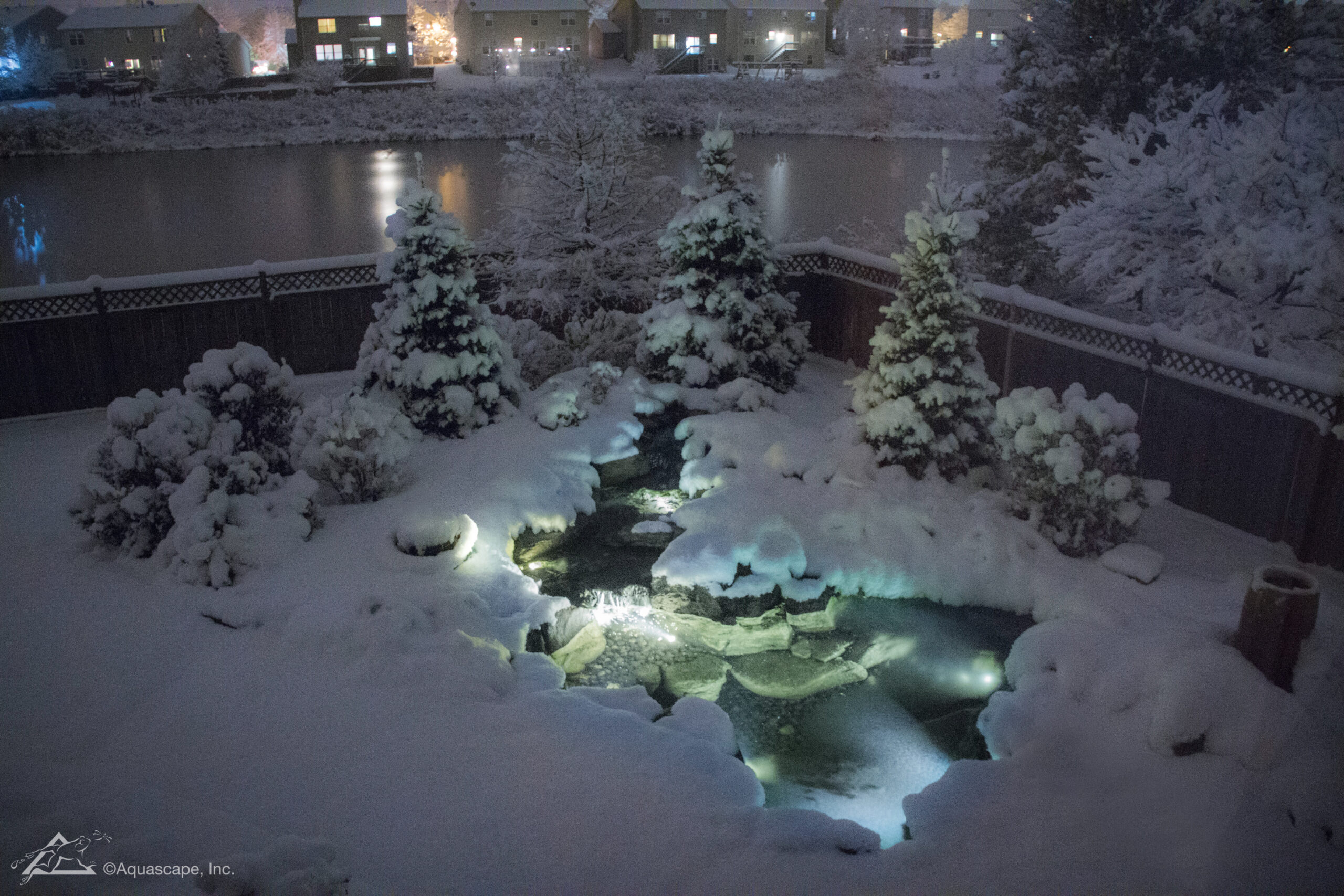
Serving the St. Charles, Naperville, Illinois area, Aqua Landscapes offers winter pond maintenance in the Chicagoland area. You may want to shut your pond down for winter. We offer winter pond maintenance, and pond cleaning services so your pond can enter ready for winter. Simply removing your pond’s excess debris and adding Aquascape Activated Pond Carbon should set you up for the winter. Living in Illinois, you will begin to see ice formation. This is what most of us in the area will see, and we’ll spend the next few months longingly viewing our ponds from indoors.
During these frosty months, you can either keep your pond running for the winter, or shut it down. To shut your pond down, first unplug the pump, pull it out of the pond, and store it in a frost-free location, submerged in a bucket of water to keep the seals from drying out.
Send Us Your Photos
Having Pond Problems?
Click here to upload a photo of your yard and connect with a pond design expert


The bottom line for winterization is maintenance. Roughly 70 percent of pond owners in the colder climates decide to shut down their system because they don’t enjoy tending to their water garden during the bitter months of the winter. The aesthetic rewards of the winter pond are absolutely worthwhile, so by all means; don’t be afraid to keep the system running as long as possible. Shutting down a pond during winter is also an option. Just be sure you take precautionary measures to preserve fish, plant, and pump life.

Floating Heaters/Pond De-icer
If your geographic area experiences long periods of exceptionally cold weather like here in Illinois, the pump won’t be enough to keep a hole open in the ice, and you’ll want to consider adding a floating Aquascape Pond De-icer. Controlled by a thermostat, the unit only runs when the water temperature is at or below freezing, heating only the surrounding water to just above freezing, and then shutting off again.
The best thing you can do if you live in extremely cold climates is to incorporate a combination of the pump and floating deicer. Be sure to position them so the two units are not near each other, otherwise the Aquascape Pond De-icer will run continuously in order to heat the that water that’s constantly being circulated by the pump.
Have Questions About Winter Pond Maintenance? We Have Answers!
Why is maintaining an open hole in the ice with an aerator and de-icer critical for fish health during a Chicagoland winter?
An open hole is critical because it allows for essential gas exchange, releasing toxic gases like carbon dioxide and methane that build up beneath the ice. Even in freezing temperatures, a quality subsurface aeration system prevents the entire pond surface from sealing over. This simple winter maintenance step, combined with a de-icer, protects your fish from suffocation and environmental stress.
At what temperature should I shut down and remove the pump and external filter from my traditional pond system?
The pond pump and external filtration should typically be shut down and removed when the water temperature consistently drops below 45°F to prevent damage from freezing. Pumps should be stored submerged in a bucket of water in a temperature-stable location, and external filters should be drained, cleaned, and properly covered. This protects your valuable equipment from costly freeze damage that requires emergency Pond Repairs.
How do Aqua Landscapes’ Fountain & Aeration System Services manage the winter needs of large lakes and commercial features?
For large lakes and commercial features in Kane County, our specialized Fountain & Aeration System Service focuses on deep-water aeration to maintain oxygen levels throughout the winter. Fountains are typically removed or secured before the deep freeze, while robust aeration ensures the entire water column remains healthy for aquatic life. This prevents winter turnover and major ecological damage in large bodies of water.
Is it recommended to continue running a Pondless Waterfall feature continuously throughout the St. Charles winter?
Yes, a Pondless Waterfall Installation can often be safely run continuously during mild St. Charles winters because the water is constantly moving and the pump is submerged in the protected reservoir. The continuous flow minimizes large ice formation within the stream bed, creating beautiful, naturalistic ice sculptures. Only during extreme freezes should the pump be turned off and disconnected.
What preparation is required for submersible lighting systems before the onset of heavy winter snow and ice?
Prior to the heavy winter season, submersible lighting systems should be checked for loose wires or cracked fixtures as part of your Fall Winterization check. While most low-voltage LED lighting is designed to remain submerged, ensuring the transformer is safely protected in a dry, covered area prevents electrical damage from harsh moisture and ice build-up.
What maintenance is needed for an automatic fill valve system during the freezing winter months?
An automatic fill valve system must be isolated and completely shut off during the freezing winter months to prevent the supply lines from bursting. The main supply line feeding the valve should be disconnected and drained entirely, just like any outdoor spigot. This simple measure avoids emergency Leak Detection & Repair services for burst pipes once spring arrives.
What specific care is required for hardy aquatic plants like water lilies and marginals before winterization?
Hardy aquatic plants like water lilies require cutting back dead foliage and submerging the pots to the deepest part of the pond (at least 2 feet) where the water temperature is stable. Marginal plants that live on shelves should also be pruned back to just above the water line to prevent decaying matter from polluting the water quality during dormancy. This maximizes plant survival and minimizes nutrient overload in spring.
Should I remove floating leaves and debris from the pond surface daily during late fall and early winter?
Yes, removing floating leaves and organic debris is crucial, especially during late fall, to prevent them from sinking and decomposing into toxic sludge (muck). This dramatically reduces the nutrient load in the water, which helps manage water quality even when the pond is covered in ice. Consistent debris removal simplifies the following year’s Spring Clean-outs significantly.
If my pond freezes over completely, how should I handle the ice without harming my fish or the liner?
If the pond freezes completely, never use an axe, hammer, or harsh chemicals to break the ice, as the shock waves can severely injure or kill the fish and damage the liner. Instead, safely introduce warm water onto the ice surface or use a gentle source of heat to carefully melt a small hole. Continuous aeration is the best proactive step to prevent a full freeze-over in the first place.
What special preparations are necessary for the pump in a Fountainscape installation before winter?
The pump in a Fountainscape installation must be removed from the underground reservoir basin before the first hard freeze to prevent cracking. The pump should be disconnected, thoroughly cleaned of mineral deposits, and stored submerged in water in a climate-controlled area. This preparation protects the mechanical components and ensures the pump is ready for a quick spring start-up.